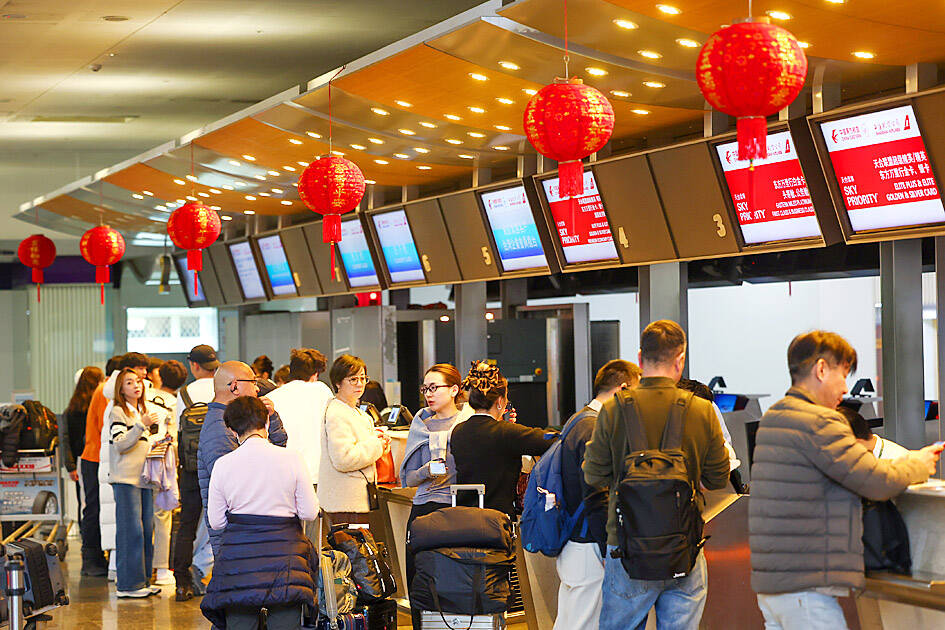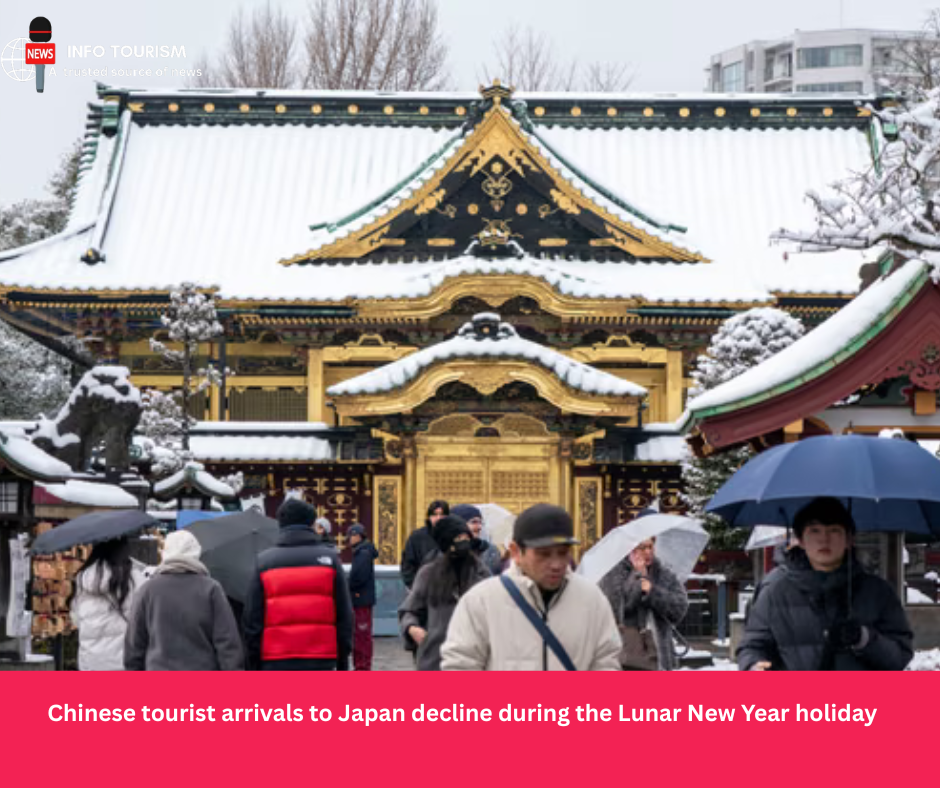
TOKYO: Chinese tourists are continuing to avoid Japan in large numbers during the Lunar New Year holiday period, as diplomatic tensions between the two countries deepen over security issues involving Taiwan.
Japan has fallen out of the top 10 overseas destinations for Chinese travellers marking the festive season, according to media reports, amid a sharp decline in arrivals since late last year. Data from Japan’s transport ministry showed that the number of Chinese visitors to Japan in December almost halved compared with the same period in 2025, despite a tourism boom fuelled by the country’s weak currency.
The downward trend is expected to persist during the 40-day Lunar New Year travel rush, with estimates suggesting that arrivals from China could drop by as much as 60% year-on-year. Instead, destinations such as South Korea, Thailand, Singapore, Vietnam and Russia are expected to attract more Chinese holidaymakers.
South Korea is forecast to emerge as the most popular overseas destination, with about 250,000 Chinese visitors anticipated during the holiday period, representing a 1.5-fold increase from the previous year.
The tourism slump follows a diplomatic row sparked by remarks from Japanese Prime Minister Sanae Takaichi, who in November told lawmakers that Japan’s self-defence forces could be deployed if a crisis in the Taiwan Strait posed an “existential” threat to the country. China, which regards Taiwan as part of its territory and has vowed reunification with the mainland, responded angrily to the comments.
Officials in Beijing subsequently urged tourists and students to reconsider travel to Japan. Chinese authorities have also issued repeated advisories warning of potential safety risks, although there have been no reported incidents specifically targeting Chinese nationals.
The dispute intensified this week when China’s Foreign Minister Wang Yi criticised Takaichi at the Munich Security Conference, accusing her of attempting to revive Japan’s militarist past. Wang warned that Japan would be heading towards “self-destruction” if it pursued such a path.
Japan responded through diplomatic channels, rejecting the allegations as “factually incorrect and ungrounded”. Tokyo said its efforts to strengthen defence capabilities were aimed at responding to an increasingly severe security environment and were not directed at any specific country.
China’s special representative on Korean peninsula affairs, Liu Xiaoming, further criticised Takaichi’s remarks, describing them as evidence of Japan’s lingering militarist ambitions. In a post on X referencing Japan’s 1941 attack on Pearl Harbour, Liu warned that history’s lessons must be heeded.
On Sunday, the Chinese consulate general in Osaka again urged nationals to refrain from travelling to Japan following a fatal stabbing in a popular tourist district. The incident, which involved a teenage victim and injured two others, did not involve Chinese nationals.
Despite the travel advisories, some Chinese travellers have continued with their plans. One man told Japan’s Kyodo news agency that it was important to foster goodwill between ordinary citizens of both countries, while a woman from Shanghai said she intended to proceed with her family trip, describing the alert as politically motivated.
The latest downturn in Chinese arrivals marks a significant shift for Japan’s tourism sector, which had been counting on the return of visitors from its largest pre-pandemic source market.