
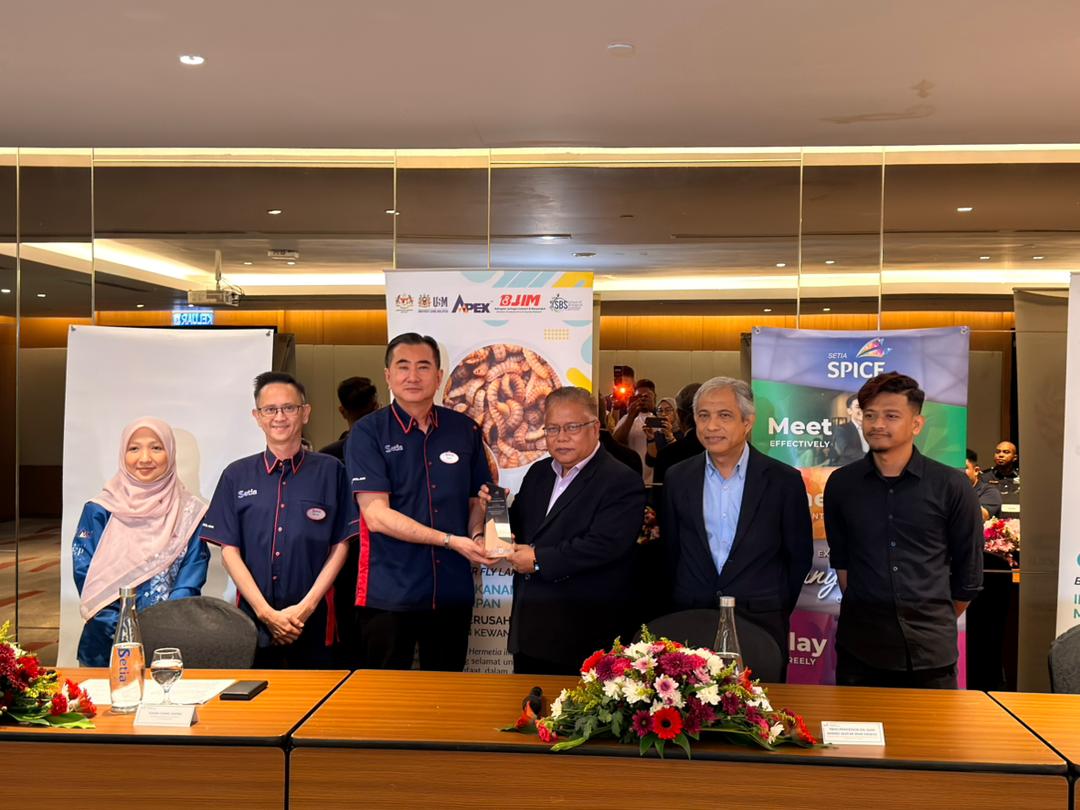
PENANG: Setia SPICE Convention Centre & Arena (Setia SPICE) has taken a decisive step forward in sustainable event management, turning food waste from its events into valuable resources through a collaboration that brings together industry, academia and enterprise.
The initiative, launched today in partnership with Universiti Sains Malaysia (USM) and Al-Ansar Integrated Sdn Bhd, centres on converting food waste into high-value outputs using Black Soldier Fly Larvae (BSFL) technology, reinforcing circular economy practices while supporting the agro-industry and food security.
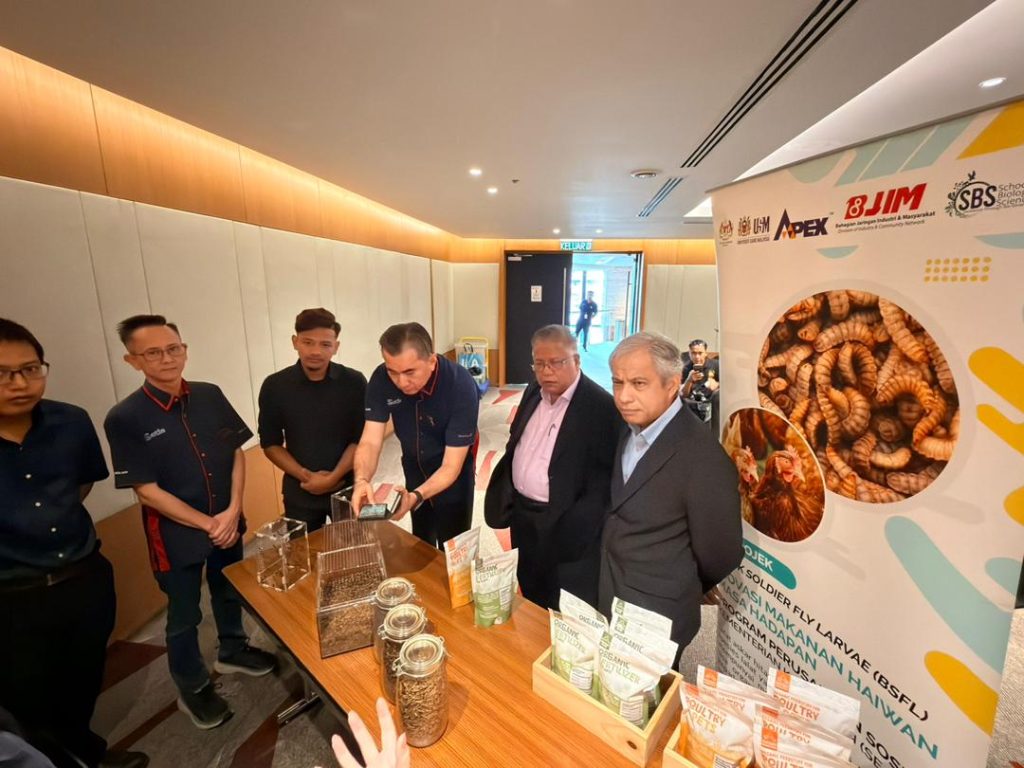
Under the system, food waste generated from events at Setia SPICE is first segregated and weighed before being processed as feed for the larvae. Within 10 to 14 days, the larvae mature and are subsequently utilised as livestock feed, effectively closing the waste loop.
Divisional General Manager of S P Setia Bhd Chan Ching Hiong said the initiative was driven by the urgent need to address the environmental impact of food waste.
“In 2025 alone, Setia SPICE recorded more than 8.4 metric tonnes of food waste from 57 banquet events. Food waste does not simply disappear. In landfills, it contributes between eight and 10 per cent of global greenhouse gas emissions, contaminates soil and water, and accelerates methane emissions,” he said at the launch.
“This reality compelled us to pursue practical and scalable solutions, leading us to collaborate with USM as our scientific and research partner in BSFL technology.”
To date, Setia SPICE has completed two pilot deliveries using the technology, processing more than 319.5 kilogrammes of food waste. Moving forward, the convention centre aims to implement scheduled collections for all eligible events to ensure consistent and responsible waste management.
Research has shown that BSFL is rich in protein and beneficial fats, offering an improved amino acid profile while reducing harmful pathogens such as E. coli and Salmonella. The larvae also support livestock gut health due to their antimicrobial properties. Meanwhile, the residual by-product, known as frass, can be used as a nutrient-rich organic fertiliser, further strengthening the circularity of the system.
The programme demonstrates a full-cycle approach in which food waste is transformed into animal feed, with the resulting poultry products eventually making their way back into the food supply chain, completing a loop from waste to nourishment.
The collaboration is expected to generate valuable research data for USM while enabling Al-Ansar Integrated to scale sustainable feed production. At the same time, it creates new economic opportunities within the agro and waste management sectors, contributing to a more resilient ecosystem.
The initiative reflects Setia SPICE’s long-standing commitment to sustainability, embedded in its operations since inception through efforts in energy efficiency, resource optimisation and responsible waste management. It also aligns with broader national priorities and the United Nations Sustainable Development Goals 2030.
Beyond this collaboration, Setia SPICE is expanding its sustainability agenda through additional initiatives, including food waste composting projects with a local retail mall and upcoming collaborations with local authorities to convert food waste into methane and biofuel.


