LENGGONG: The return of the ancient Perak Man skeleton to the Lenggong Valley Archaeological Gallery has significantly boosted tourism in the area, reinforcing its status as a key heritage destination in Malaysia.
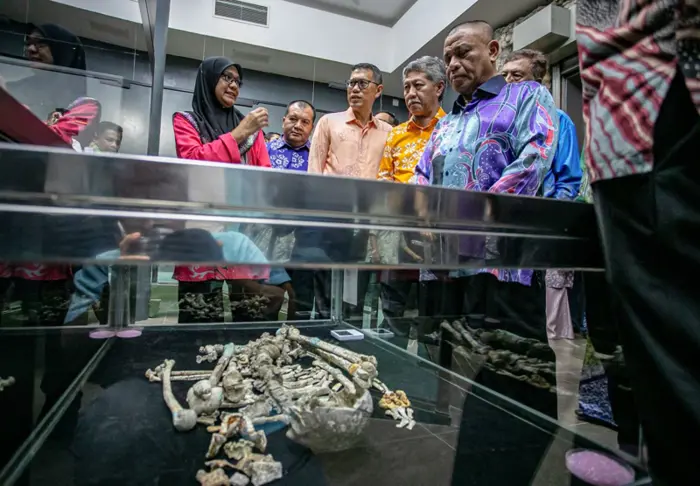
The approximately 11,000-year-old skeleton, previously kept by the National Heritage Department in Kuala Lumpur, has been on public display in Lenggong since July last year. Deputy Home Affairs Minister Datuk Seri Dr Shamsul Anuar Nasarah said the relocation has transformed the exhibit into one of the gallery’s main attractions, contributing to a rise in visitor numbers.
He explained that the remains were earlier housed in Kuala Lumpur to facilitate upgrading works at the gallery. The skeleton was returned to Lenggong on June 26, following a period of meticulous conservation to preserve its physical condition, including strict control of temperature and humidity.
Shamsul Anuar, who is also the Member of Parliament for Lenggong, spoke during the reopening of the Lenggong Valley Archaeological Gallery and the launch of a World Heritage Site commemorative coin on April 10.
He added that efforts are ongoing to bring back the Perak Woman skeleton, estimated at around 8,000 years old, which is currently housed at Universiti Sains Malaysia (USM). Discovered in 2004 at Gua Teluk Kelawar in Lenggong, the find highlights the valley’s importance as a site of prehistoric human civilisation.
A total of RM5 million has been allocated to upgrade the gallery, introducing holographic technology, interactive exhibits, and modern visual elements to enhance the visitor experience.
Meanwhile, the commemorative coins launched feature the Archaeological Heritage of the Lenggong Valley, one of six UNESCO World Heritage Sites in Malaysia, as part of the special edition. The collection also includes Mulu National Park and Niah Caves in Sarawak, Kinabalu Park in Sabah, as well as George Town in Penang, Melaka, and the Forest Research Institute Malaysia Forest Park, Selangor (FRIM FPS).
Beyond their value as collectables, the coins are intended to serve as educational tools, promoting awareness of Malaysia’s rich heritage and fostering a sense of national identity among current and future generations.